 DAILYINFOGRAPHICS.EU
Rules Infographics — Drinking Age, Speed Limits & Retirement
The legal age to drink, the real speed limit on the Autobahn, and how much later you’ll retire than your parents did — three laws that vary sharply by country, mapped against the actual statute in each one.
Each rules infographic on this site covers a law that most people assume is roughly the same everywhere in Europe, and isn’t. The gap between countries is the entire story, so every piece here plots all 31 countries on one shared axis rather than picking a flattering handful.
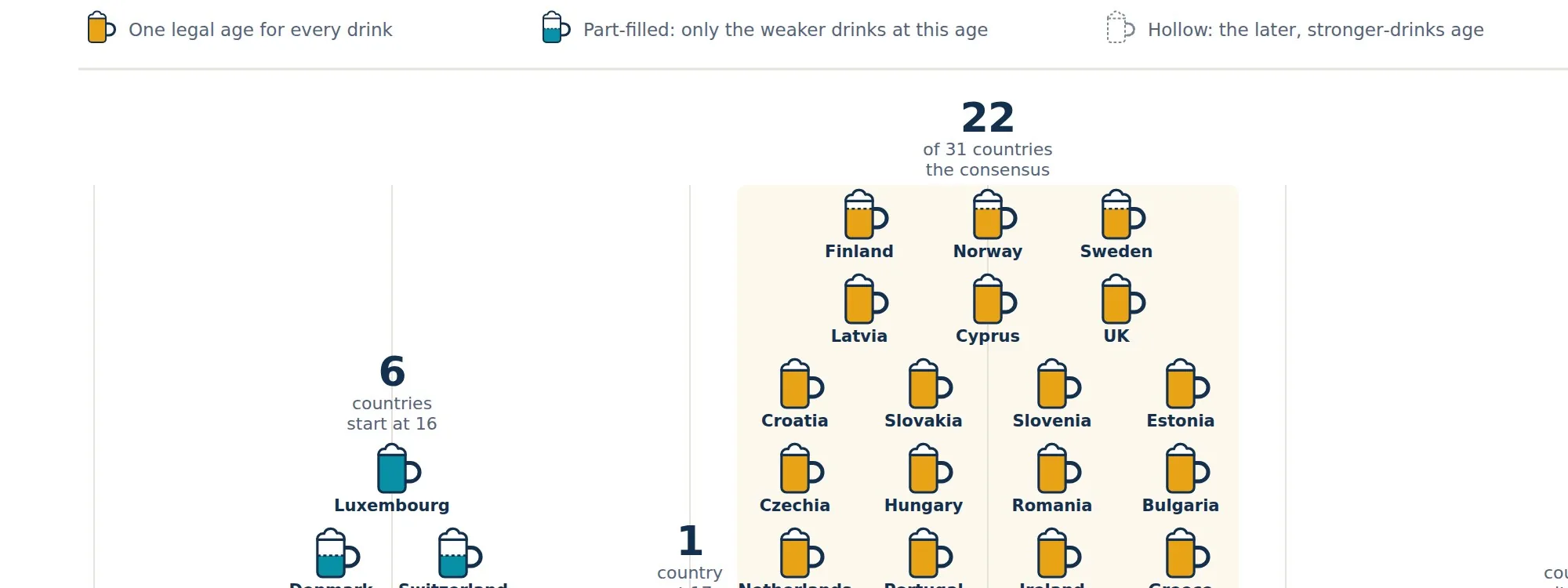
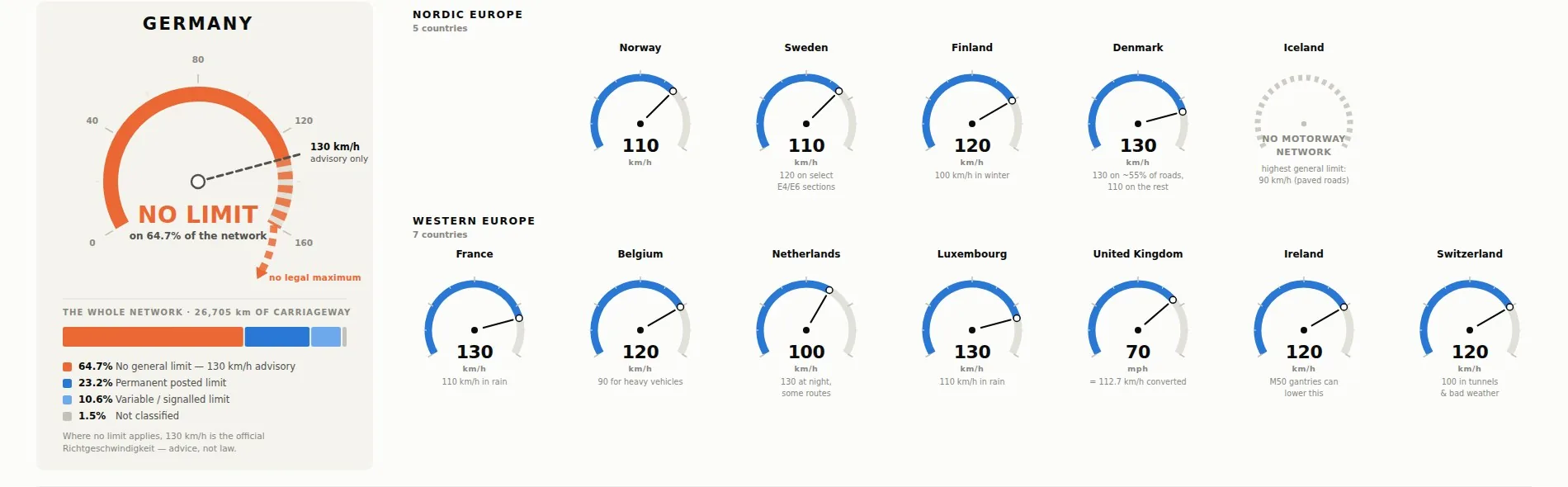
Legal drinking age sits at 18 in most of Europe, but a real minority of countries draw the line somewhere else entirely, including a few two-tier systems this piece marks explicitly rather than averaging away. Germany’s Autobahn is the case everyone thinks they know and almost nobody has the real number for: only 64.7% of the network is genuinely derestricted, and where no limit applies, 130 km/h is advisory, not law.
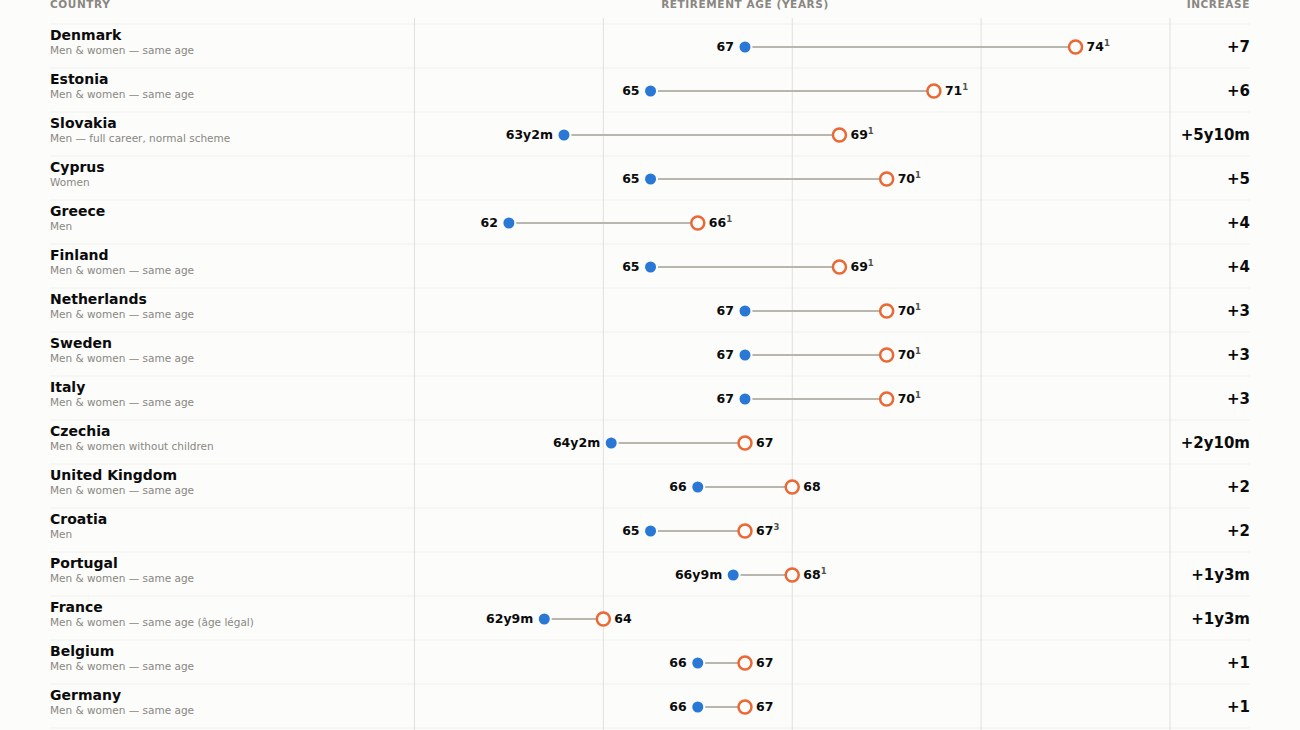
Retirement age is the one still moving under everyone’s feet: Denmark’s statutory age is on course to rise from 67 to 74, the largest increase in this 31-country comparison, while eleven countries currently have no increase legislated at all. Checking the actual statute rather than the popular assumption is the standard behind every rules infographic on this site, and it is why each rules infographic here plots all 31 countries rather than a flattering handful.
Rules infographics on this site
How these comparisons are built
All three infographics share a design choice that's easy to miss: none of them average a rule across the region or quote a single EU-wide figure. Each plots every one of the 31 countries individually on the same axis, because a continental average would hide exactly the gap the piece exists to show — the country sitting at 18 next to the one that draws the line elsewhere, or the government that hasn't touched its retirement age next to Denmark, which is raising its own by seven years. That same country-by-country discipline is why the drinking age piece calls out its two-tier systems by name instead of rounding them into one figure, and why the Autobahn piece keeps the derestricted percentage and the advisory limit as two separate numbers rather than blending them into one misleading average.
Frequently asked questions
Is the legal drinking age really 18 everywhere in Europe?
No. Most of Europe sets it at 18, but a real minority of countries draw the line somewhere else entirely, and a few run two-tier systems that this piece marks explicitly rather than averaging away.
What percentage of Germany's Autobahn actually has no speed limit?
Only 64.7% of the network is genuinely derestricted, according to the highway speed limits infographic on this page — far less than the "unlimited Autobahn" reputation suggests.
Is the 130 km/h figure on unrestricted Autobahn sections a legal limit?
No. Where no speed limit applies, 130 km/h is only an advisory recommendation, not a legally enforced limit, a distinction the Autobahn piece draws out explicitly.
How much is Denmark's retirement age set to rise, and is that the biggest increase covered here?
Denmark's statutory retirement age is on course to rise from 67 to 74, which the retirement age infographic identifies as the largest increase among the 31 countries it compares.
How many countries in this comparison have no retirement-age increase legislated at all?
Eleven countries currently have no increase legislated, according to the same 31-country retirement age comparison, even as others like Denmark are raising theirs sharply.
Why do all three pieces plot all 31 countries instead of a smaller sample?
Because the gap between countries is the entire story for laws like these. Plotting every country on one shared axis avoids picking a flattering handful and shows the real spread instead.