 DAILYINFOGRAPHICS.EU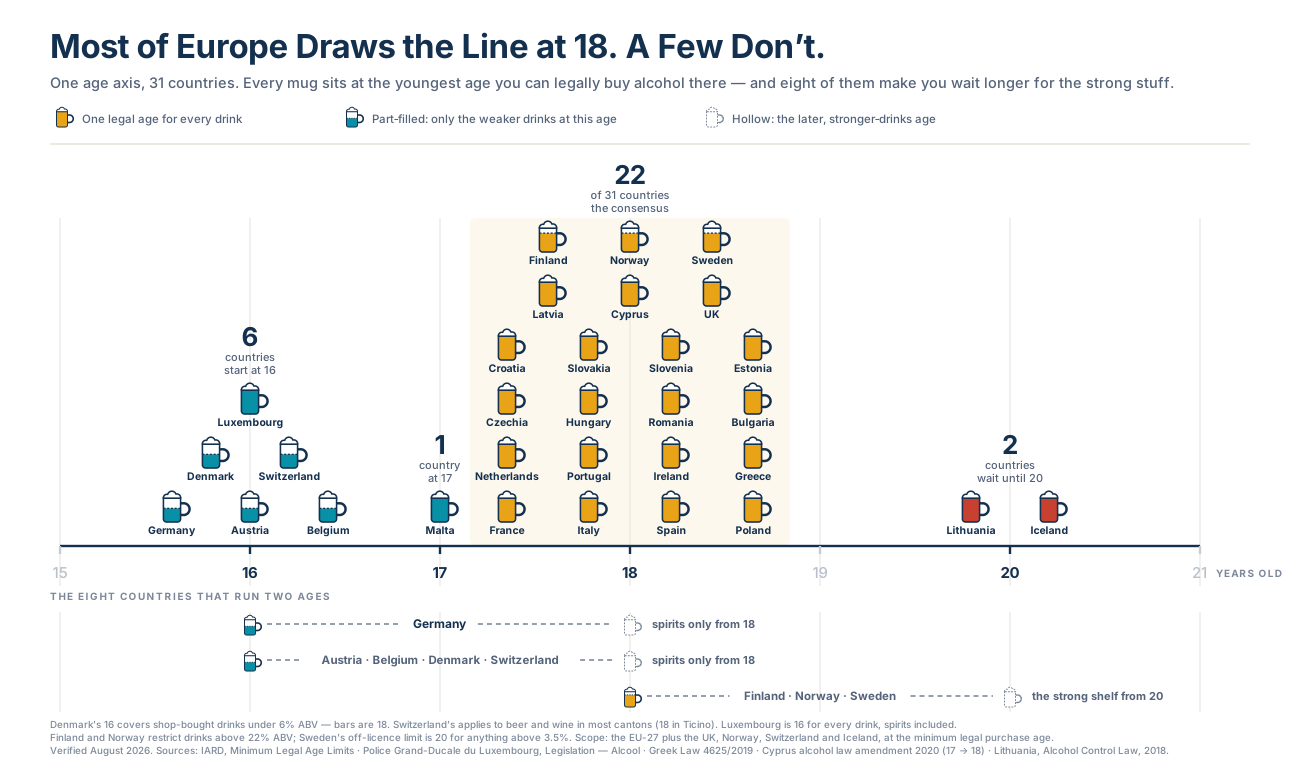
Twenty-one of the 31 countries checked here — the EU-27 plus the UK, Switzerland and Iceland — set 18 as the legal age for every drink. That consensus is wider than most people assume, and the exceptions are more specific than the usual internet shorthand suggests.
Germany's split is real. A few others aren't what you’ve heard
Germany, Austria, Belgium, Denmark and Switzerland all let 16-year-olds buy beer and wine, raising the bar to 18 for spirits. Luxembourg is the outlier among the “16” group: it’s 16 for every drink, spirits included — the widely-repeated claim that Luxembourg splits 16/18 is a 2020 policy proposal that was never enacted. Norway runs a similar split one rung higher, and shouldn’t be counted as a flat-18 country: beer and wine at 18, but spirits and other drinks above 22% ABV are locked to 20 and sold only through the state-run Vinmonopolet monopoly.
Two corrections worth stating directly: Greece is 18, not the 17 that circulates online (Law 4625/2019). Cyprus raised its age from 17 to 18 in a 2020 amendment, making Malta the only country left at 17. And Georgia and Moldova — often cited as having Europe’s lowest drinking ages — are both actually 18; that premise didn’t survive a check against the actual legislation, so both are left off this chart.
Why some countries split the age at all
The two-tier approach used by Germany, Austria, Belgium, Denmark and Switzerland treats beer and wine as a lower-risk category than spirits, on the reasoning that their typically lower alcohol content makes an earlier introduction less risky, especially within a household or supervised setting. Whether that reasoning holds up in practice is disputed — critics point out a large glass of wine or a strong beer can carry as much alcohol as a shot of spirits — but it's the stated logic behind splitting the age rather than setting one blanket threshold, which is what most of the rest of the continent does instead.
Frequently asked questions
Which countries in Europe still allow drinking below 18?
Six countries set 16 as the age for at least one category of drink: Germany, Austria, Belgium, Denmark and Switzerland allow beer and wine at 16 while raising the bar to 18 for spirits, and Luxembourg allows every drink, spirits included, at 16. Malta is the only country left at 17 for everything.
Does Luxembourg really have a 16/18 split like Germany?
No — that claim is inaccurate. Luxembourg sets 16 as the legal age for every category of drink, spirits included. The widely-repeated claim that Luxembourg splits 16 for beer and wine and 18 for spirits, like Germany, refers to a 2020 policy proposal that was never actually enacted into law.
Is Greece's drinking age really 17, as often reported online?
No. Greece's legal drinking age is 18 under Law 4625/2019, not the 17 that circulates online. That figure appears to be an outdated claim that never accounted for the 2019 change.
What happened with Cyprus's drinking age?
Cyprus raised its legal drinking age from 17 to 18 in a 2020 legislative amendment. That change left Malta as the only European country in this dataset still set at 17.
Which European country has the highest legal drinking age?
Lithuania and Iceland are the only two countries here that make you wait until 20 for anything at all, the highest legal drinking age on this chart.
Are Georgia and Moldova really among Europe's lowest drinking ages?
No. Georgia and Moldova are sometimes cited online as having Europe's lowest drinking ages, but both are actually set at 18 — that claim didn't survive a check against the actual legislation, which is why both are left off this chart rather than plotted incorrectly.
Sources
IARD, Minimum Legal Age Limits · Police Grand-Ducale du Luxembourg, Législation — Alcool · Greek Law 4625/2019 · Cyprus alcohol law amendment 2020 (17→18) · Lithuania, Alcohol Control Law, 2018. Verified August 2026.