 DAILYINFOGRAPHICS.EU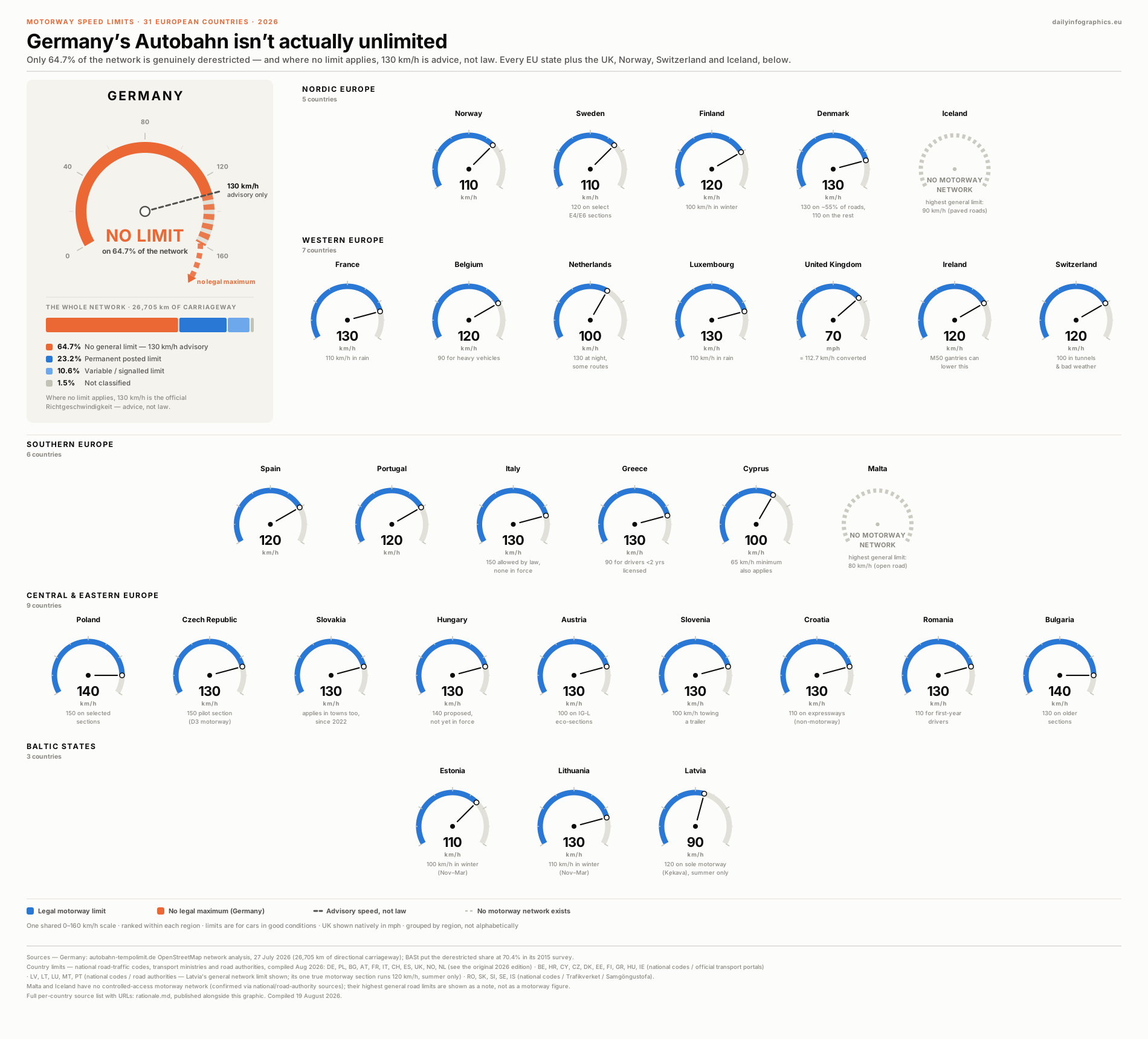
The internet loves saying Germany has no speed limit. It’s truer than most corrections manage to make it, and less absolute than the meme: 64.7% of the Autobahn network genuinely carries no legal maximum, based on an OpenStreetMap network analysis (27 July 2026) of all 26,705 km of directional carriageway. The other third is a real, posted limit — 23.2% permanent, 10.6% variable or signalled, 1.5% unclassified.
130 is advice, not law
Where no limit applies, 130 km/h is Germany’s official Richtgeschwindigkeit — a recommended advisory speed, not an enforceable one. Drive faster and you won’t get a ticket for speed alone, though insurers can still find you partly liable in a crash above it.
Everyone else has real, if messier, numbers
Poland and Bulgaria both allow 140 km/h, with 150 permitted on selected newer sections. Italy’s highway code permits 150 km/h in law — but no route has ever actually raised its posted limit to it, so the real-world maximum stays 130. The UK still measures in mph: 70 mph is 112.7 km/h, converted precisely rather than rounded. Malta and Iceland have no controlled-access motorway network at all, so there is no motorway limit to report — both are shown on the chart with an explicit “no network” marker rather than a substitute figure.
Expanded from an earlier 11-country edition to the full 31: every EU member state plus the UK, Norway, Switzerland and Iceland, each verified against its own national road-traffic code or transport-ministry source rather than a single aggregator.
Frequently asked questions
Does Germany's Autobahn really have no speed limit at all?
Not across the whole network. 64.7% of it genuinely carries no legal maximum, based on an OpenStreetMap network analysis of all 26,705 km of directional carriageway. The remaining third has a real posted limit: 23.2% permanent, 10.6% variable or signalled, and 1.5% unclassified.
If there's no limit, is 130 km/h an actual law?
No. Where no limit applies, 130 km/h is Germany's official Richtgeschwindigkeit, a recommended advisory speed rather than an enforceable one. Driving faster won't get you a speeding ticket on its own, though insurers can still find you partly liable in a crash above that speed.
Which countries allow the highest legal motorway speeds after Germany?
Poland and Bulgaria both allow 140 km/h, with 150 km/h permitted on selected newer sections. Those are the highest posted limits among the countries compared here, short of Germany's unrestricted stretches.
Does Italy really allow 150 km/h on its motorways?
It's legal in Italy's highway code, but no route has ever actually raised its posted limit to it, so the real-world maximum on Italian motorways stays 130 km/h in practice.
Why don't Malta and Iceland have a motorway speed limit listed?
Because neither country has a controlled-access motorway network at all. Rather than substitute a different figure, the chart marks both with an explicit "no network" label.
How many countries does this comparison cover, and how was it verified?
31 countries in total: every EU member state plus the UK, Norway, Switzerland and Iceland. Each was checked against its own national road-traffic code or transport-ministry source rather than a single aggregator, expanded from an earlier 11-country edition of the same graphic.
Sources
Germany: autobahn-tempolimit.de OpenStreetMap network analysis, 27 July 2026 (26,705 km of directional carriageway); Bundesanstalt für Straßenwesen (BASt) 2015 survey (70.4%). All 31 other countries: national road-traffic codes, transport ministries and road authorities — full per-country source list published alongside this graphic. Malta and Iceland’s lack of a motorway network confirmed via national/road-authority sources. Compiled 19 August 2026.