 DAILYINFOGRAPHICS.EU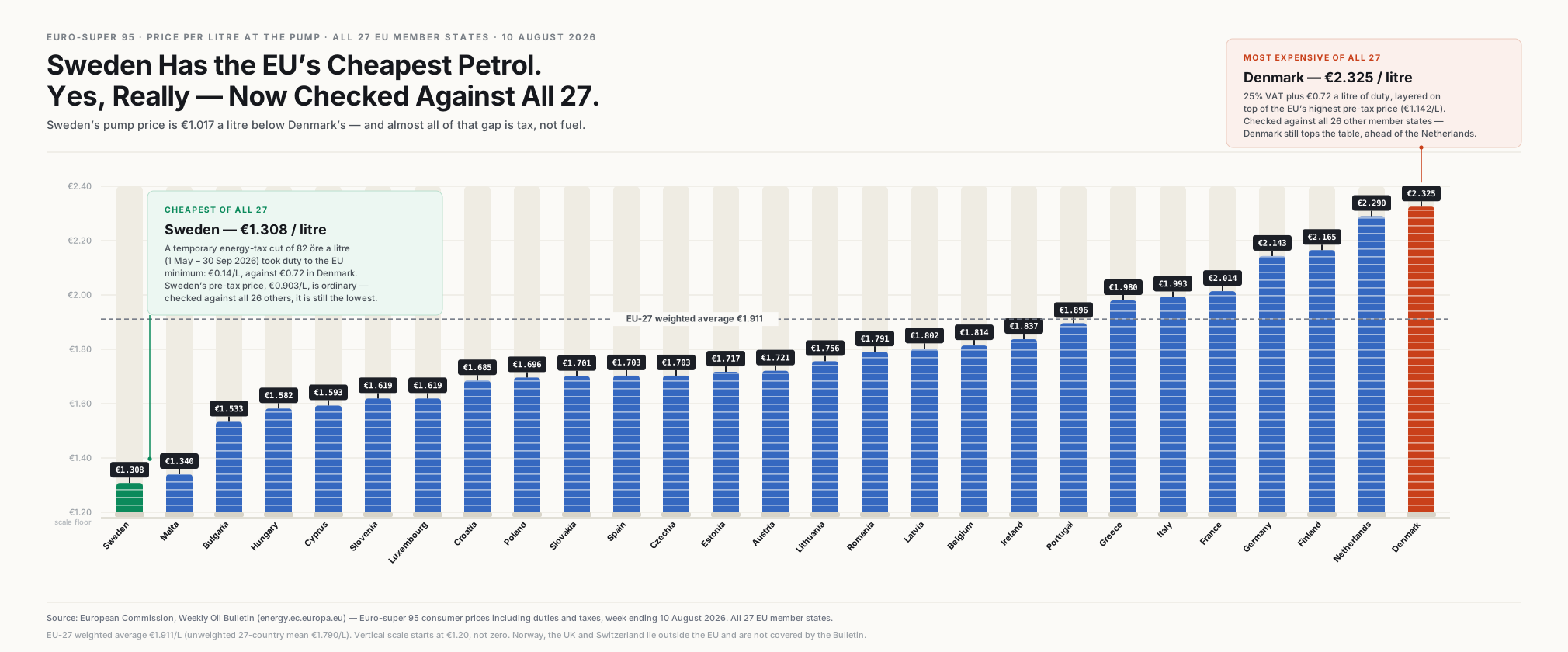
Sweden has the European Union's cheapest petrol, at €1.308 a litre for Euro-Super 95 — a full €1.017 below Denmark's €2.325, the EU's most expensive. This is now checked against all 27 EU member states, not a partial sample: every country's figure comes from the European Commission's Weekly Oil Bulletin for the week ending 10 August 2026, at the pump, including all duties and taxes, cross-checked against two independent mirrors.
Sweden's price is a tax cut, not cheap fuel
Sweden's pre-tax price, €0.903 a litre, is ordinary — close to the EU norm. What makes it the cheapest is a temporary energy-tax cut of 82 öre a litre, running 1 May to 30 September 2026, which drops Sweden's fuel duty all the way to the EU's legal minimum of €0.359/litre. Denmark charges €0.72/litre in duty on top of the EU's highest pre-tax price, €1.142/litre, then adds 25% VAT. The gap between the two countries is almost entirely tax policy, not the underlying cost of fuel.
The temporary Swedish discount ends 30 September 2026 — after that date, expect Sweden's price to move back up toward the EU-27 weighted average of €1.911/litre (the unweighted 27-country mean is €1.790/litre).
Why the EU sets a floor, not a ceiling
The EU doesn't set petrol prices. It sets a floor under one piece of them. Brussels requires every member state to charge an excise duty on petrol that meets or exceeds a bloc-wide minimum — but nothing stops a country taxing well above it. That's why Sweden's temporary cut works the way it does: the discount pushes Sweden's duty down to that legal minimum, €0.359 a litre, and it can't legally go lower without a change at EU level. Denmark hasn't used the same room at the bottom. Its duty, €0.72 a litre, is more than five times Sweden's, charged on top of the highest pre-tax price in this comparison, then taxed again at 25% VAT. None of that is required by EU law. It's a national choice — and most of the countries near the top of this chart have made the same one.
One oil market, 27 different pump prices
Petrol is a global commodity before it's a national product. Every EU refiner buys crude off the same world market, and the EU's refined-fuel trade is integrated across borders — a litre of Euro-Super 95 costs a refiner roughly the same whether it's heading for a station in Sweden or Denmark. If crude and refining costs were the whole story, pump prices across the bloc would sit close together. They don't: the gap between the EU's cheapest and most expensive petrol, €1.017 a litre, is more than half the EU-27 average price on its own. Crude sets a floor. Refining margins and distribution add a bit more. Excise duty and VAT — both set entirely by national governments, not Brussels — add the rest, and it's that last layer that moves the most from one member state to the next. A shared oil market doesn't produce a shared pump price, because no rule forces 27 governments to tax it identically.
Frequently asked questions
Why is Sweden's petrol so cheap right now?
A temporary energy-tax cut of 82 öre a litre, running 1 May to 30 September 2026, drops Sweden's fuel duty all the way to the EU's legal minimum of €0.359 a litre. Sweden's underlying pre-tax price, €0.903 a litre, is otherwise close to the EU norm.
What happens to Sweden's petrol price after the discount ends?
The temporary Swedish discount ends 30 September 2026. After that date, expect Sweden's price to move back up toward the EU-27 weighted average of €1.911 a litre.
Why is Denmark's petrol the most expensive in the EU?
Denmark combines the highest pre-tax price in the comparison, €1.142 a litre, with a fuel duty of €0.72 a litre, then adds 25% VAT on top — none of which is required by EU law.
Does the EU set petrol prices directly?
No. Brussels only sets a minimum excise duty that every member state must meet or exceed. Nothing stops a country taxing well above that floor, which is exactly what most of the countries near the top of this chart do.
Why aren't Norway, the UK or Switzerland included in this comparison?
They sit outside the EU and aren't covered by the European Commission's Weekly Oil Bulletin, which this comparison is built on. All 27 EU member states are included.
If every EU refiner buys crude on the same world market, why do pump prices differ so much?
Crude and refining costs are roughly the same across the bloc, so they set a floor and add only a small amount on top. The rest of the gap — more than half the EU-27 average price on its own — comes from excise duty and VAT, which are both set entirely by national governments, not Brussels.
Sources
European Commission, Weekly Oil Bulletin (energy.ec.europa.eu) — Euro-Super 95 consumer prices including duties and taxes, week ending 10 August 2026, all 27 EU member states, cross-checked against countryeconomy.com and mappr.co.