 DAILYINFOGRAPHICS.EU
Politics Infographics — EU History, Flags & Elections
69 years of EU enlargement in one timeline, every national flag that has actually changed since 2010, and which European countries still legally require you to vote — three pieces built to correct the specific claims that circulate loosest.
Every politics infographic on this site is built around the same discipline: plot only what happened, on the date it happened, and say plainly when the popular version of a story doesn’t hold up.
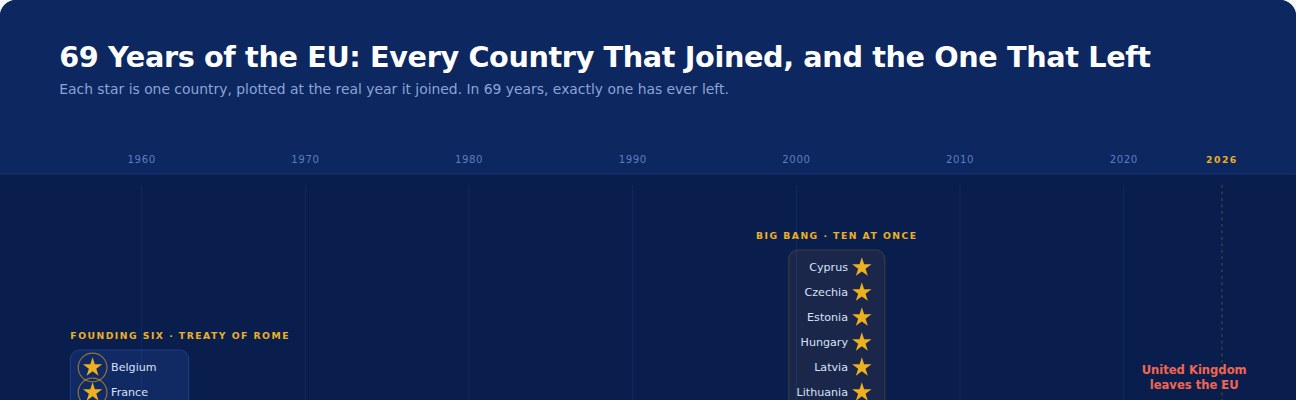
The first of these politics infographics, 69 Years of the EU, tracks every accession wave from the six founding members in 1957 to the 27 members today, on a real calendar axis — including the only departure, given its own distinct treatment rather than folded quietly into the same line as every join.
Four Countries Changed Their Flag Since 2010 is the more contrarian piece: it verifies every national flag change in the world across that window, plus two proposals that didn’t happen, and reports the finding straight even though it isn’t the one a European-focused site might want — not one of the four verified changes is a European country.
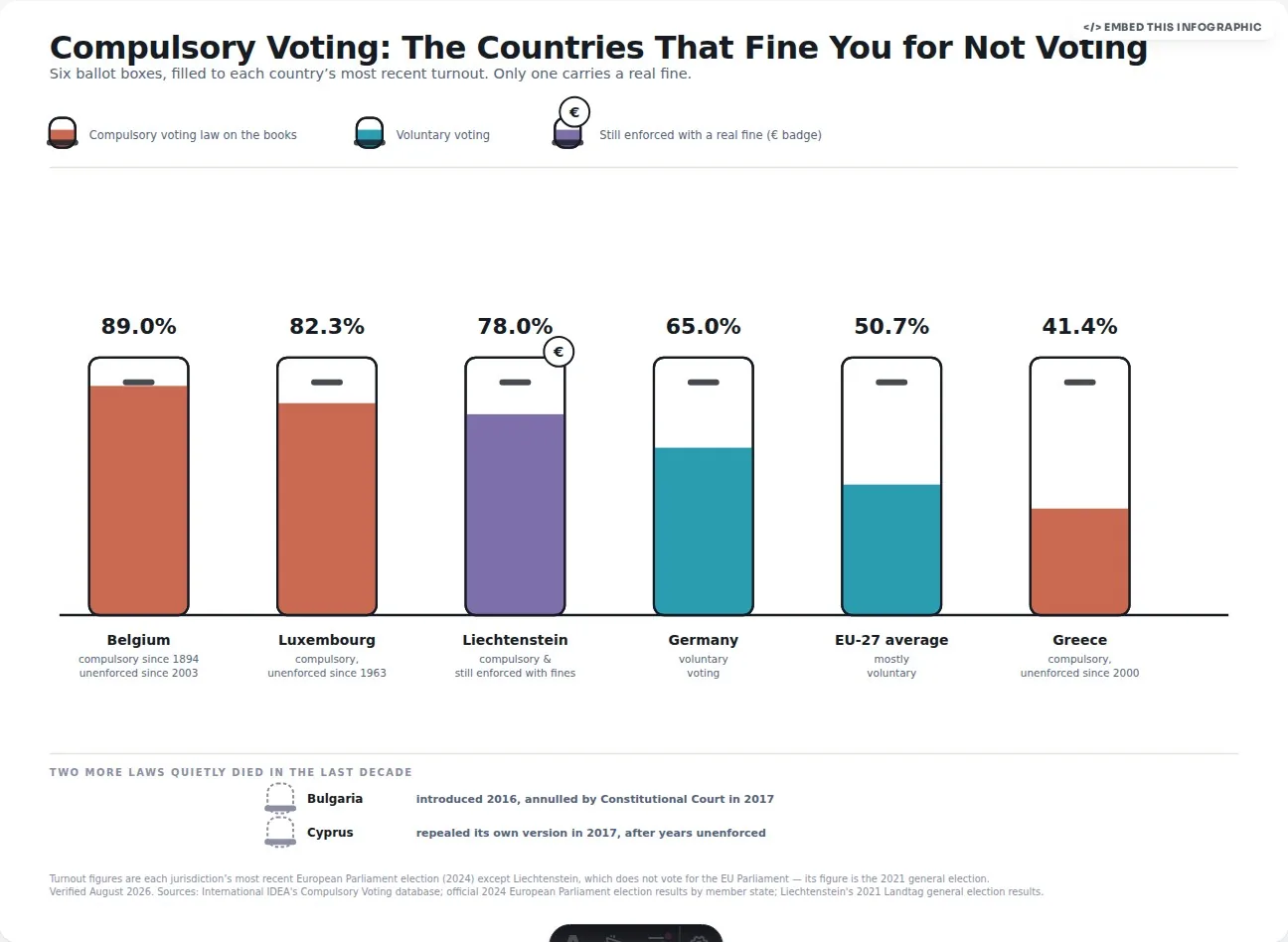
Compulsory Voting checks which of the six European jurisdictions with a vote-or-else law actually enforce it — and finds the one country that still fines non-voters isn’t the one with the highest turnout. That same plot-only-what-happened standard runs through every politics infographic on this site.
Politics infographics on this site

How these three pieces are scoped
All three share a scoping choice worth stating plainly. The enlargement timeline counts only formal accession into the European Union itself, not the wider set of candidate or associate arrangements that casual coverage sometimes lumps in as "joining Europe." The flag piece counts only a change to a flag's actual design, which is why the tally across the whole world since 2010 lands at four rather than climbing into the dozens of minor technical spec revisions that pass unnoticed most years. And the compulsory voting piece treats all six jurisdictions as legally distinct even where enforcement has quietly lapsed, because a fine still on the books counts as a real rule, whether or not anyone currently gets sent one.
Frequently asked questions
How many EU founding members were there in 1957, and how many are there now?
Six founding members in 1957, growing through every accession wave to 27 members today, according to the 69-years-of-enlargement timeline on this page.
How is the EU's one departure treated differently on the enlargement timeline?
It gets its own distinct treatment on the chart rather than being folded quietly into the same line as every join, since a departure is a different kind of event from an accession.
Is it true that none of the four verified flag changes since 2010 happened in Europe?
Yes. The national flags piece verifies every national flag change worldwide since 2010 and finds that not one of the four confirmed changes is a European country, which runs against what a Europe-focused site might expect to find.
What are the "two proposals that didn't happen" in the flag piece?
They are flag-change proposals that were seriously floated somewhere in the world during the same window but never actually enacted. The piece includes them alongside the four real changes so the record shows what didn't happen as well as what did.
How many European jurisdictions actually have a compulsory-voting law?
Six European jurisdictions have a vote-or-else law on the books, according to the compulsory voting infographic on this page, though not all of them actively enforce it.
Does the country that fines non-voters also have the highest turnout?
No. The compulsory voting piece finds that the one country which still fines non-voters isn't the same country with the highest turnout among the six jurisdictions compared.