 DAILYINFOGRAPHICS.EU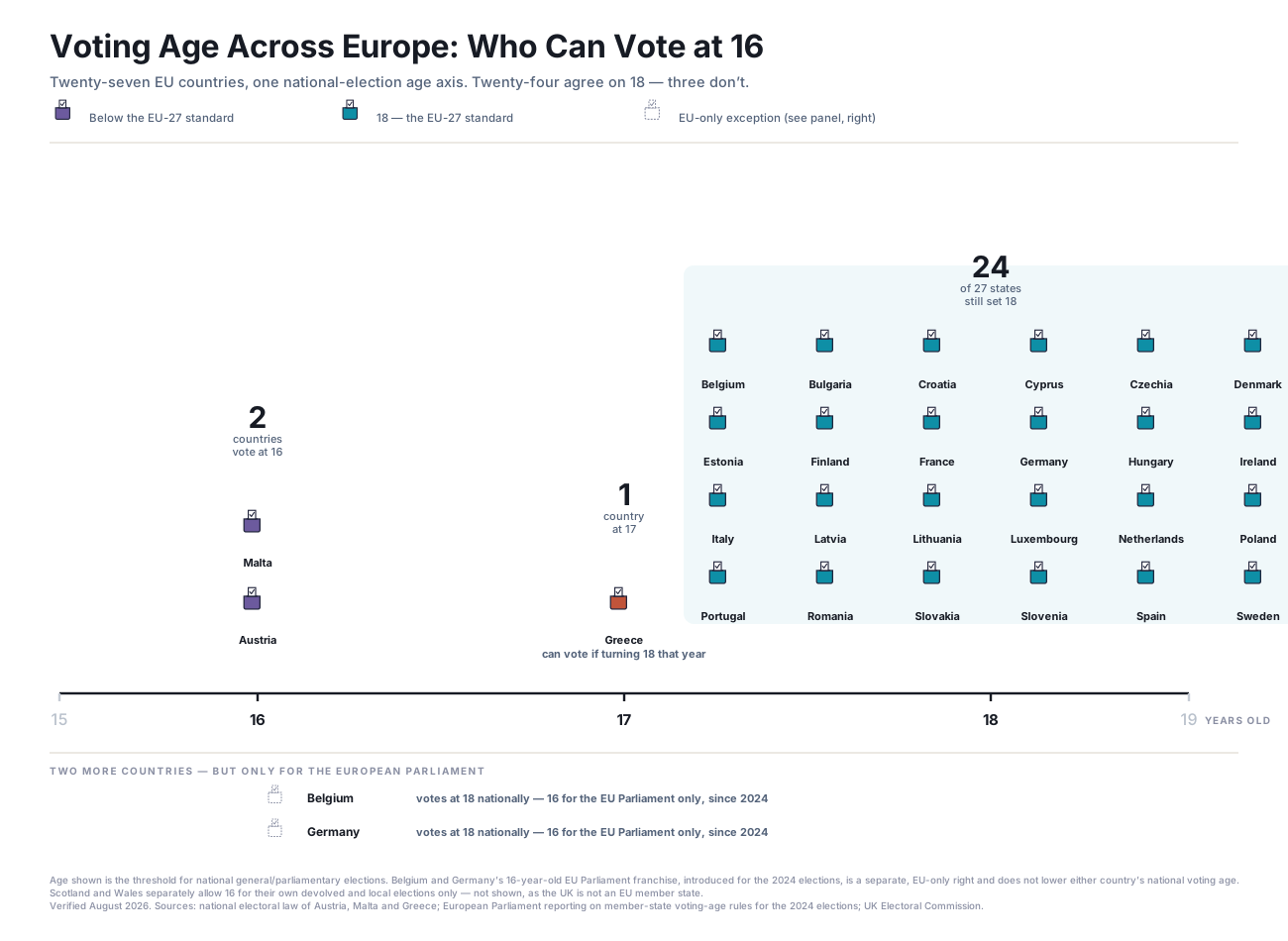
Austria and Malta are the only two EU countries where a 16-year-old can vote in a national parliamentary election. Belgium and Germany also let 16-year-olds vote — but only for the European Parliament, not for their own national legislatures. Those are two different facts, and the distinction gets lost constantly in casual explainers that just say a country “lowered the voting age to 16” without saying for which election.
The two real exceptions: Austria and Malta
Austria was the first EU member state to adopt 16 as its voting age, in 2007, and it applies broadly — national elections, European Parliament elections, and most referendums. Malta followed in 2018, lowering the age to 16 for general elections, European Parliament elections, and referendums alike. In both countries, a 16-year-old’s vote in a national election counts exactly the same as any other citizen’s.
Greece sits just above them at 17, though with a wrinkle: Greek citizens are eligible to vote in the year they turn 18, which in practice can mean casting a ballot at 17 if the election falls before their birthday. It’s a narrower exception than Austria’s or Malta’s, but it is still a national-election exception, not an EU- or local-only one.
The EU-only carve-out: Belgium and Germany
Since the 2024 European Parliament elections, EU member states have had the option to let 16-year-olds vote specifically for the European Parliament, even if their own national voting age stays at 18. Belgium and Germany both took that option. In both countries, a 16-year-old can vote for their country’s MEPs but still has to wait until 18 to vote in a national general election — two different ballots, two different ages, under the same passport.
Not a national vote either: Scotland and Wales
The United Kingdom left the EU and isn’t on this chart, but it’s worth a mention because the same confusion shows up here too. Scotland and Wales both let 16-year-olds vote in their own devolved elections — the Scottish Parliament and the Senedd — and in local council elections. Neither applies to UK general elections, where the voting age is still 18 across the whole country. A 16-year-old in Edinburgh can vote for the Scottish Parliament but not for a Westminster MP.
A trend, not (yet) a wave
The direction of travel is toward 16, not away from it: Austria and Malta made the change permanent years ago, the EU opened the door for EU-only lowering in time for 2024, and Belgium and Germany walked through it. But the movement has been slow and piecemeal — one country, one election type, at a time — rather than a coordinated EU-wide shift. For now, turning 18 is still what actually opens the ballot box in the large majority of European national elections.
Sources
National electoral law of Austria, Malta and Greece; European Parliament reporting on member-state voting-age rules for the 2024 European Parliament elections; UK Electoral Commission and devolved-parliament electoral law for Scotland and Wales.