 DAILYINFOGRAPHICS.EU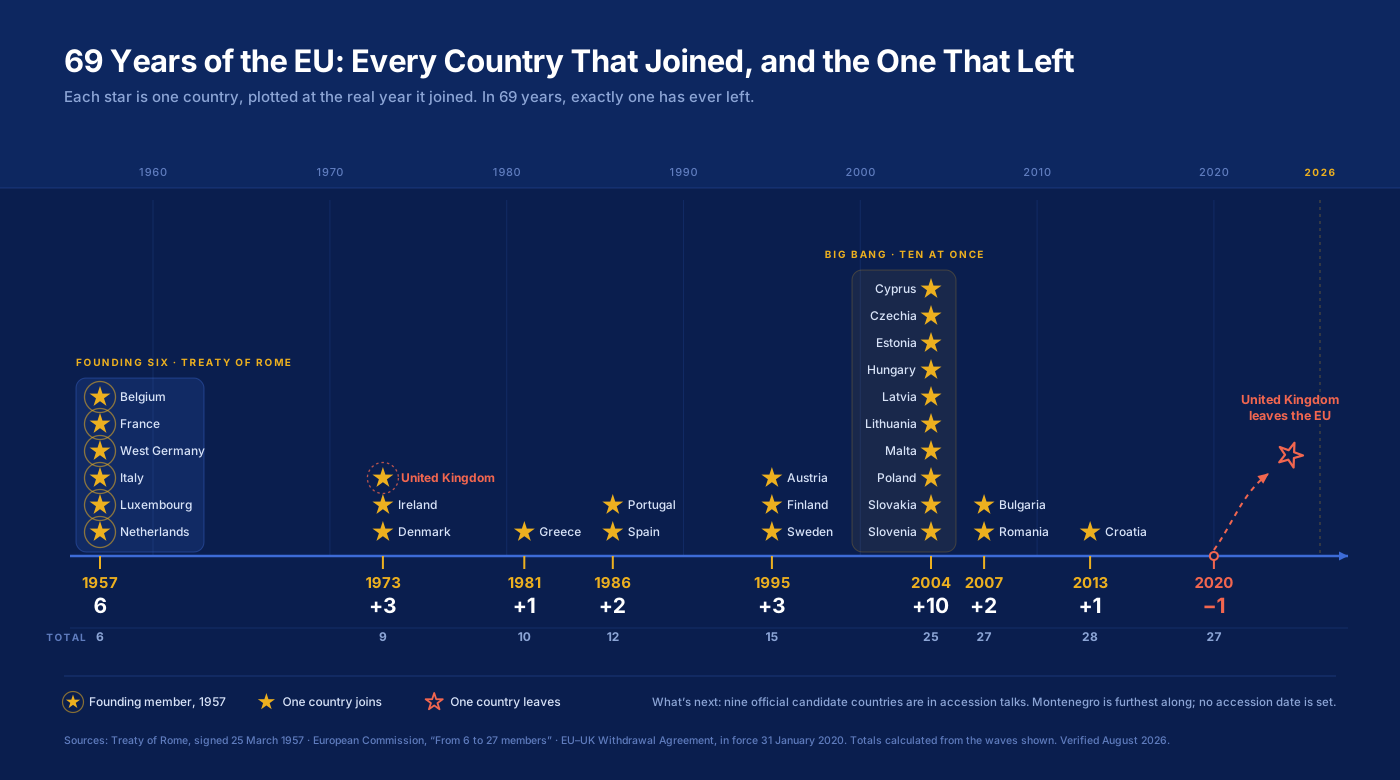
The European Union has grown from six founding members to twenty-seven in sixty-nine years — and lost exactly one along the way. The six founders (Belgium, France, West Germany, Italy, Luxembourg, the Netherlands) signed the Treaty of Rome in 1957, creating the European Economic Community. Seven further waves of accession followed, the largest by far in 2004, when ten countries joined at once.
The only country to ever leave
The United Kingdom joined in the first enlargement, in 1973, alongside Ireland and Denmark. It left on 31 January 2020 — the only member state in the EU’s history to withdraw. No accession has undone that: the total sits at 27, not 28, and has for six years.
Nine countries currently hold official candidate status. Montenegro is furthest along in the accession process, with several negotiating chapters provisionally closed as of mid-2026, but no accession date has been set for any candidate.
Reading the sequence
The membership count didn’t climb steadily — it moved in eight distinct jumps: 6, 9, 10, 12, 15, 25, 27, 28, and back to 27 after the UK left. Each wave after the six founders added a different number of countries: three in 1973 (the UK, Ireland and Denmark), one in 1981, two in 1986, three in 1995, ten in 2004, two in 2007, and one more in 2013 — the peak of 28 members, before the UK’s 2020 withdrawal brought the total back down to 27. The 2004 wave alone added two-thirds again to the club’s size in a single year — 15 members growing to 25 — ten countries admitted together against a background of one, two or three at a time in every other wave before or since. That's also why the nine current candidate countries don’t map onto a fixed timetable: every prior wave, including 2004’s, closed on its own schedule, and Montenegro’s provisionally-closed chapters mark it as further along than any other candidate, not as a guarantee of when the next member actually joins.
Frequently asked questions
How many countries founded the EU, and when?
Six: Belgium, France, West Germany, Italy, Luxembourg and the Netherlands, which signed the Treaty of Rome in 1957 and created the European Economic Community.
Which country left the EU, and when?
The United Kingdom, on 31 January 2020 — the only member state in the EU’s history to withdraw. No accession since has undone that departure; membership has sat at 27, not 28, for six years.
When did the largest single wave of EU enlargement happen?
2004, when ten countries joined the EU at once — by far the largest of the seven accession waves that followed the six founders’ 1957 signing of the Treaty of Rome.
How many members does the EU have today?
27. The total grew from six founders in 1957 to a peak of 28 in 2013, then dropped back to 27 after the United Kingdom’s withdrawal in 2020.
Which countries joined the EU alongside the UK in 1973?
Ireland and Denmark. That first enlargement wave brought the total from six founding members to nine.
Which candidate country is furthest along in joining the EU?
Montenegro, among the nine countries currently holding official candidate status, with several negotiating chapters provisionally closed as of mid-2026 — though no accession date has been set for any candidate.
Sources
Treaty of Rome, signed 25 March 1957 · European Commission, “From 6 to 27 members” · EU–UK Withdrawal Agreement, in force 31 January 2020.