 DAILYINFOGRAPHICS.EU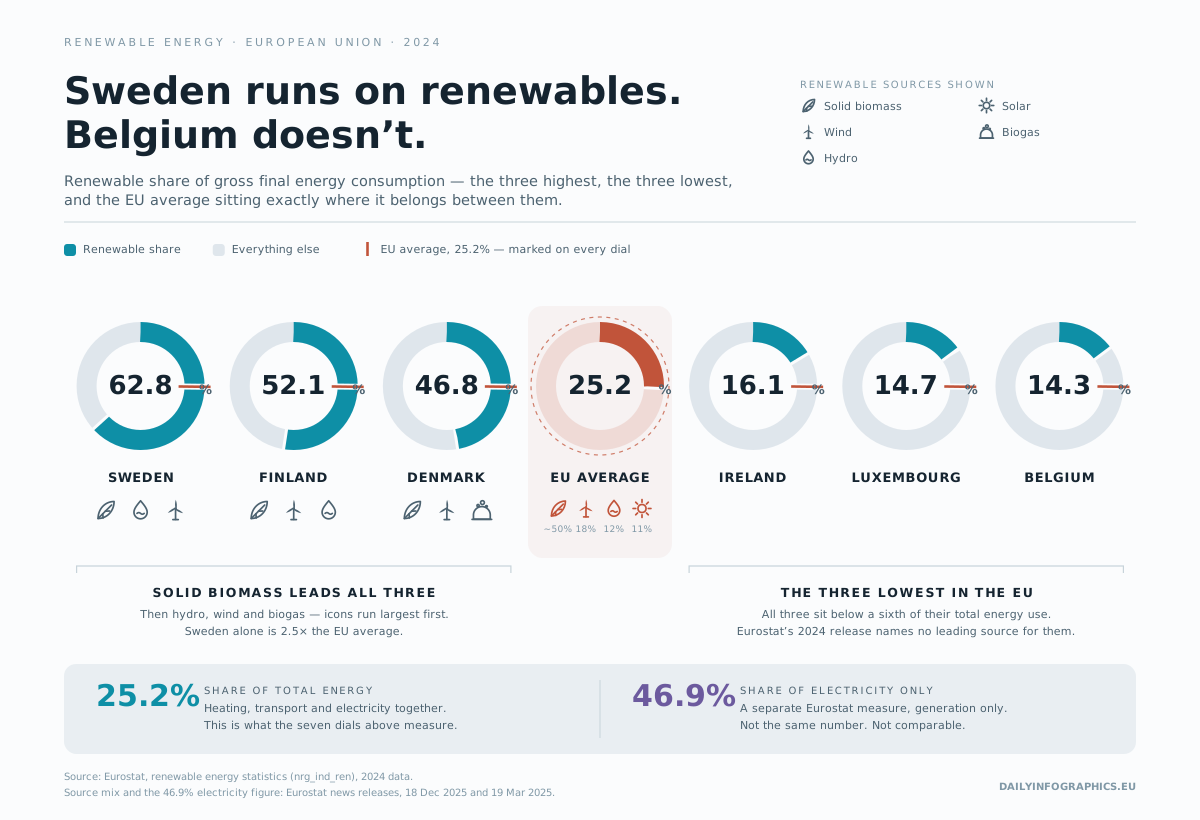
Sweden gets 62.8% of its total energy from renewable sources — solid biomass, hydro and wind, in that order. Belgium gets 14.9%. Both are measured the same way by Eurostat’s renewable energy statistics. The EU-wide average sits at 26.2%, almost exactly between the two extremes shown here.
Two numbers that get confused
26.2% is the renewable share of the EU’s total final energy consumption — heating, transport and electricity combined. A separate Eurostat measure, renewable share of electricity generation only, reached about 46.9% in 2024. The two are not the same number and shouldn’t be quoted interchangeably — a country can generate half its electricity from renewables while most of its heating and transport still runs on fossil fuels.
Solid biomass leads the renewable mix in all three top countries. The three lowest — Belgium, Slovakia, Ireland — all sit below a fifth of their total energy use, and Eurostat’s data names no single leading renewable source for any of them.
Frequently asked questions
What's the difference between the 26.2% EU average and the 46.9% renewable-electricity figure?
They measure different things. 26.2% is the renewable share of the EU’s total final energy consumption — heating, transport and electricity combined. 46.9% is a separate Eurostat measure covering electricity generation only, reached in 2024. A country can generate close to half its electricity from renewables while most of its heating and transport still run on fossil fuels, so the two numbers shouldn’t be quoted interchangeably.
What makes Sweden's renewable share so much higher than Belgium's?
Sweden draws 62.8% of its total energy from renewables — solid biomass, hydro and wind, in that order — versus Belgium’s 14.9%. Both are measured the same way by Eurostat, so the gap reflects genuinely different national energy mixes rather than a difference in methodology.
What's the leading renewable source in the three lowest-ranked countries?
Eurostat’s data doesn’t name one. Belgium, Slovakia and Ireland — the three lowest per Eurostat’s provisional 2025 data — all sit below a fifth of their total energy use coming from renewables, and unlike the top three — where solid biomass leads the mix — no single renewable source dominates in any of the three lowest countries.
How far above the EU average is Sweden?
About 2.4 times. Sweden’s 62.8% renewable share compares with an EU-wide average of 26.2%, the widest gap on this chart between a single country and the bloc-wide figure.
Where does this data come from?
The main figures come from Eurostat’s renewable energy statistics (nrg_ind_ren), with the EU average and three-lowest ranking updated to Eurostat’s provisional 2025 data, released 23 July 2026. The separate 46.9% electricity-only figure and the biomass, hydro and wind source mix are drawn from Eurostat news releases dated 18 December 2025 and 19 March 2025.
Does the EU average sit closer to the top or the bottom of the range shown here?
Almost exactly in the middle. At 26.2%, the EU average sits roughly between Sweden’s 62.8% and Belgium’s 14.9% — the two extremes shown on this chart — rather than skewing toward either end.
Sources
Eurostat, renewable energy statistics (nrg_ind_ren), 2024 data; EU average and three-lowest ranking updated to Eurostat's provisional 2025 data, released 23 July 2026. Source mix and the 46.9% electricity figure: Eurostat news releases, 18 December 2025 and 19 March 2025.