 DAILYINFOGRAPHICS.EU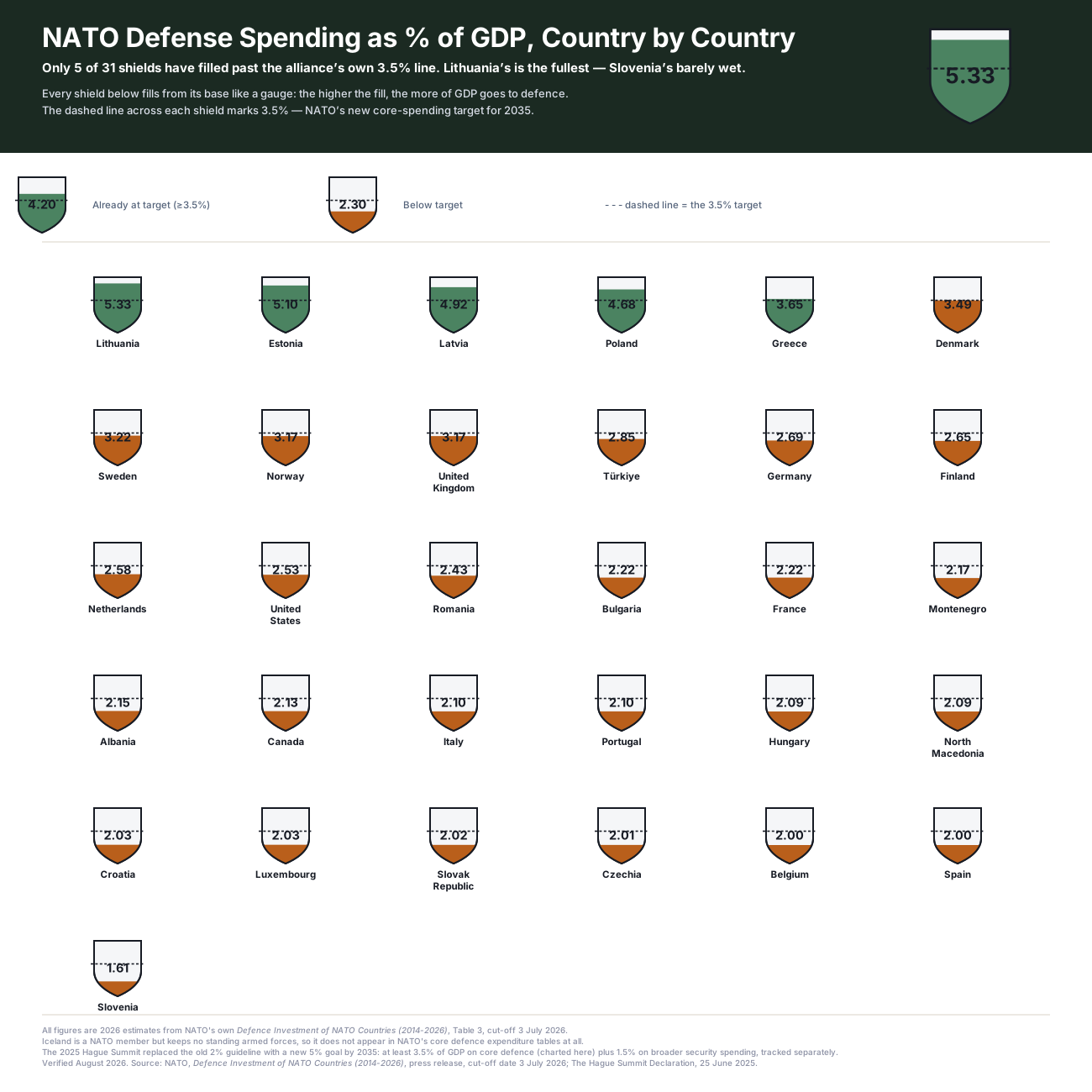
Lithuania now puts 5.33% of its GDP into core defence spending — the highest share of any NATO member, and more than three times Slovenia's 1.61%, the lowest. Both figures are 2026 estimates from NATO's own Defence Investment of NATO Countries report, cut off 3 July 2026. Five allies — Lithuania, Estonia, Latvia, Poland and Greece — are already spending at or above 3.5% of GDP, nine years ahead of the deadline NATO itself only just set.
The target isn't 2% anymore
For over a decade, "2% of GDP" was the number every NATO spending story led with. That guideline is gone. At the 2025 Hague Summit, allies agreed to a new goal: 5% of GDP annually by 2035, split into two tiers. At least 3.5% has to go to core defence — armed forces and NATO's own capability targets, the same category charted here. The remaining 1.5% covers broader security spending: critical-infrastructure protection, cybersecurity, civil preparedness and defence-industrial capacity. The chart above shows only the 3.5% core tier, because that's the one NATO reports consistently, country by country, going back to 2014.
Nine years is a long runway, and most of the alliance still has real distance to cover. Twenty-six of the 31 countries charted here are still below 3.5%, including Germany (2.69%), France (2.22%) and Italy (2.10%) — three of the alliance's largest economies.
Why the Baltics and Poland are already there
The five countries already past 3.5% share a border with Russia or Belarus. Lithuania, Latvia and Estonia have spent since 2022 rebuilding defence budgets that shrank for two decades after the Cold War; Poland's 4.68% funds one of the largest active procurement programmes in Europe, including new armour and air-defence purchases. Greece is the outlier on the list geographically, but its spending is driven by a separate, older rivalry: its long-running tension with Türkiye over Aegean and Cypriot waters, which has kept Greek defence spending elevated relative to its economy for decades regardless of NATO guidance.
One number, three definitions
NATO's own figures "may considerably diverge" from the numbers a country's media or national budget documents report, according to the report's own methodology note. NATO defines core defence expenditure by agreed alliance rules — including pensions paid to military retirees as personnel costs, and R&D spent on major equipment as equipment costs — which don't always match how a national finance ministry categorises the same spending. That's a large part of why a domestic headline and a NATO comparison table can quote different percentages for the same country in the same year, without either one being wrong.
A number to watch: Slovenia
Slovenia's 1.61% carries an asterisk in NATO's own report. A new Slovenian government took office on 4 June 2026, and NATO notes that Slovenia's financial projections from 2026 onward "will be reviewed and reprogrammed," with a credible plan to reach 3.5% by 2035 to be detailed after the alliance's upcoming Ankara Summit. Slovenia's current-last-place figure, in other words, may not hold for long — it's a government in the middle of resetting its own commitment, not a country declining to make one.
Sources
NATO, Defence Investment of NATO Countries (2014-2026), Table 3 (core defence expenditure as a share of GDP, constant 2021 prices), press release, cut-off date 3 July 2026, 2025 and 2026 figures are estimates. The Hague Summit Declaration, 25 June 2025, for the new 5% (3.5% core / 1.5% broader) spending framework.